
Step one: enter a race.
I recommend doing this approximately eight weeks before the race, in a moment of genuine optimism. You should feel good about it at the point of entry. You should be in a phase where running is going well, you feel basically capable, and an autumn 10k seems completely reasonable.
Step two: do less training than intended.
Life will intervene. Specifically, life will intervene in ways you couldn’t have predicted and also in ways you absolutely could have predicted. A school holiday. A chest cold that wasn’t serious enough to cancel things but was serious enough to cancel running. A week where you ran three times but shorter than planned and one of those wasn’t really running it was more of a fast walk with intent.
By the time race day arrives, you will have done perhaps 60% of the preparation you meant to do. This is, statistically, about average.
Race morning
The alarm goes off earlier than expected, despite you setting it.
You eat something you read was a good pre-race breakfast, which turns out to be fine if you’re running a 1:45 half marathon and slightly excess for what you’re actually doing.
You drive to the race. You park slightly further away than you meant to because the closer spaces were gone, which functions as an unplanned warm-up. You collect your number. You have a conversation with someone you don’t know at the bag drop who has done this race before and has opinions about kilometres 6 and 7. Their opinions turn out to be accurate.
The race itself
Kilometres 1 and 2: fine. Actually good. The crowd is going and you go with it. You are briefly faster than intended, which is a mistake you make every time and have not corrected.
Kilometres 3 and 4: recalibration. You slow to something sustainable. Your internal monologue, which started optimistic, is now pragmatic. This is fine. This is the pace. This is what we’re doing.
Kilometres 5 and 6 (where the person at bag drop warned you): they were right.
Kilometre 7: the kilometre you simply get through.
Kilometres 8 and 9: you are doing maths. Specifically, the maths of how long you have left and whether there’s any version of this where you can call the time acceptable. There isn’t, really, but you do it anyway because it gives the brain something to do.
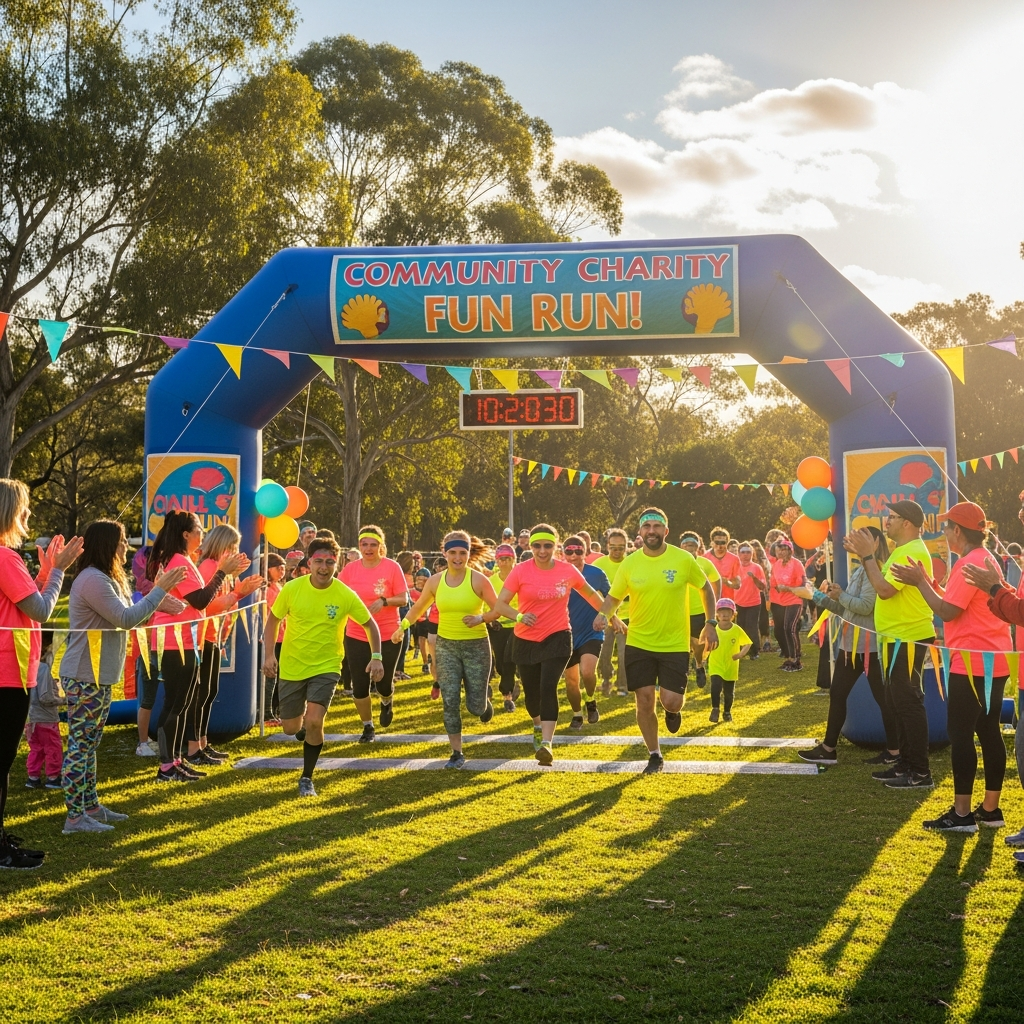
Kilometre 10: the finish line appears. You run toward it at the pace that the last ten minutes of a race produces, which is not fast but looks faster than kilometres 7 and 8, which is the most important thing.
The medal
The medal is a circle on a ribbon. It says the race name and the year. It is, by any objective measure, a modest object.
You will wear it for the rest of the day.
This is completely correct behaviour. You finished a 10k. You were up early. You paid an entry fee. You drove to a car park, ran 10 kilometres on a Sunday morning, and crossed a finish line while being cheered by volunteers who have been there since 7am.
The participation medal is not a consolation prize. It’s a correct prize for what you actually did.
The time is yours. You don’t have to tell anyone.
Final result: finished. Position: irrelevant. Feelings about it: quietly good, actually.
That’s the whole point.